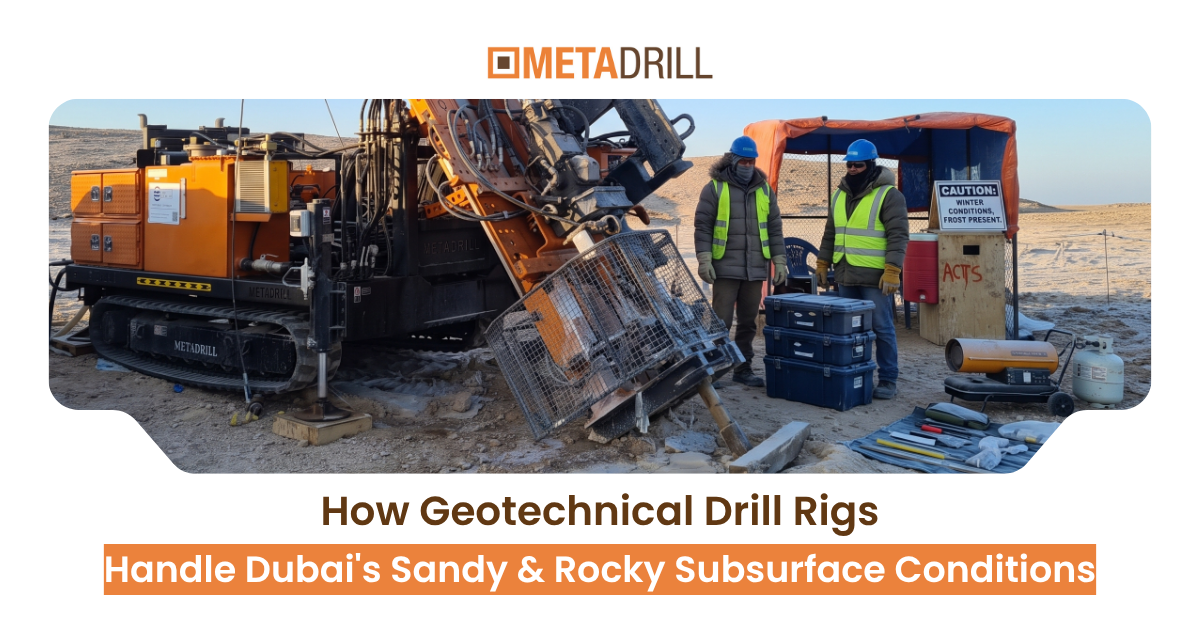
A Dubai borehole can change character quickly
A driller may begin a borehole in loose sand, pass through a cemented layer and then meet weak carbonate rock before lunch. On another site, reclaimed fill and groundwater may dominate the first several metres. That is why choosing a geotechnical drill rig, Dubai subsurface conditions in mind, is more useful than choosing one on depth alone. The rig has to let the crew change technique without turning every formation change into a long stoppage. Torque, rotation speed, pullback, mud-pump capacity, casing options and rod handling all influence how smoothly that transition happens.
Loose sand: keeping the hole open
Loose granular soil is one of the most familiar conditions in the Emirates, but drilling it cleanly still requires control. Boreholes can collapse or run if left unsupported, especially below groundwater. Depending on the method and specification, the crew may use temporary casing, drilling fluid or other stabilization measures. Feed pressure should be controlled to avoid excessive disturbance where samples or SPT tests are planned. A rig with responsive hydraulics helps the driller adjust rather than force the tool. Fast penetration means little if the borehole is unstable and the test interval cannot be prepared correctly.
Dense and cemented horizons change the load
Dubai sands are not uniformly loose. Cementation and dense layers can increase resistance sharply. That transition raises torque demand and can cause inexperienced crews to over-push the bit.
A capable geotechnical drill rig should give the operator enough torque and speed range to match the formation. Tool selection matters just as much. The bit that works efficiently in loose sand may be ineffective once cemented material is encountered. The goal is not brute force; it is controlled energy at the cutting face.
Rock requires a different mindset
Once rock is reached, the investigation often shifts from penetration to recovery. Core quality becomes the priority. Rotation speed, water flow, bit condition, barrel setup and operator technique all influence recovery and RQD. In weak or fractured carbonate rock, aggressive drilling can destroy the very evidence the geologist needs to log. Harder material may require more stable feed and reliable pullback. This is where a multipurpose rig earns its keep because the crew can move from geotechnical sampling into wireline or conventional coring without changing the entire machine.
Where the MD600N rig fits
MetaDrill describes the MD600N rig as a multipurpose geotechnical and exploration machine. Its published configuration includes up to 600 m N-wireline capacity under specified conditions, track or truck mounting, a 1.5 m or 3 m feed stroke, a triplex mud pump and optional automatic SPT. Those numbers are more capacity than many shallow building investigations require, but they illustrate the combination that matters on mixed ground: enough pullback for deeper work, controlled rotation for coring and the ability to support common geotechnical testing. Buyers should still match the specification to their typical hole diameter, method and transport limits.
Ground conditions are only part of the equation. Many UAE fleets eventually mobilize into Saudi Arabia, Oman or other GCC markets, so the same rig has to be supportable outside the country it was purchased in. Spare parts, technical response and operator familiarity matter as much as the drilling specification once a machine travels. Our buyer's checklist for evaluating a drilling rig manufacturer covers what to ask suppliers about that regional support.
Heat affects performance above ground while geology changes below
The formation may be underground, but Dubai climate influences how effectively the rig can attack it. Cooling systems need to reject heat while ambient temperature is already high. Hydraulic oil condition, filters and hoses deserve frequent attention. Sand and dust accumulate around coolers and moving components. A high-capacity rig that is not maintained for summer conditions can lose more production to overheating than a smaller machine with disciplined preventive maintenance. For contractors, daily drilled metres are a function of both geological capability and equipment health.
Coastal ground creates a different combination
Near the coast, saturated sand, fill and saline groundwater can appear together. Drilling may require more casing and tighter fluid control, while corrosion prevention becomes part of routine equipment care. Reclaimed areas can also be heterogeneous, so sudden changes in material should be expected. This makes operator feedback and borehole logging especially important. The rig should provide stable, repeatable control so the geologist can distinguish genuine ground changes from artefacts caused by poor drilling.
Mobility matters across the Emirates
A tracked rig may be the better choice for loose sand or uneven ground because it can move independently across a prepared investigation area. Truck mounting can simplify road mobilization between sites when access is suitable. The correct choice depends on where most of your work occurs. Contractors moving between Dubai urban plots, desert infrastructure corridors and Northern Emirates rock should think about a fleet rather than a single perfect machine. One rig can be versatile, but no configuration removes every trade-off.
Work methods and local requirements still lead
Dubai Municipality and project consultants may specify soil and foundation testing procedures, while major developments can add their own HSE and access conditions. The rig must support the approved method. That means correct SPT setup where required, suitable core barrels, safe rod handling and proper containment of drilling fluids. On marine or environmentally sensitive sites, discharge controls may be stricter. Equipment choice should therefore follow the investigation plan and site constraints, not the other way around.
Operator technique still decides the result
Machine capability creates options, but the operator decides how those options are used. Experienced drillers listen to rotation load, watch returns, adjust feed and recognise when the formation has changed. They also know when to stop forcing a tool that is no longer appropriate. Training therefore belongs in any equipment strategy. A versatile rig in the hands of a crew that understands sand, cemented layers and weak rock will usually outperform a more powerful machine operated as if every formation were the same.
Carry contingency tooling for formation changes
Mixed ground rewards preparation. A crew that mobilizes with only one bit type and the minimum casing can lose hours when the borehole reaches an unexpected cemented layer or unstable saturated sand. Before starting, review nearby logs if they are available, then carry a sensible range of bits, casing and core consumables for the likely formations.
This does not mean taking the entire workshop to site. It means avoiding predictable gaps. The same principle applies to spares for pumps, rod clamps and high-wear items. In Dubai, where site access windows can be tight, having the right tool in the support vehicle can be the difference between a short adjustment and losing the rest of the shift.
Closing
Dubai's subsurface is varied enough that flexibility matters. A good geotechnical drill rig can move from loose sand to dense layers and rock while giving the operator the control needed to protect samples and maintain borehole quality. The MD600N rig is one example of a multipurpose platform designed around that range of work, but the bigger buying lesson is simple: match torque, speed, pullback, pump, mobility and support to the ground you actually encounter. When the machine and method fit the formation, the crew spends more time drilling and less time fighting the hole.
For a broader look at matching a rig to your project before you commit to a specification, see our guide to choosing a geotechnical drilling rig for UAE projects. To discuss a configuration for your ground conditions, contact the MetaDrill team.
Question to the public:
How a geotechnical drill rig handles Dubai subsurface conditions, from loose sand and cemented layers to rock coring, heat, groundwater and coastal reclamation.