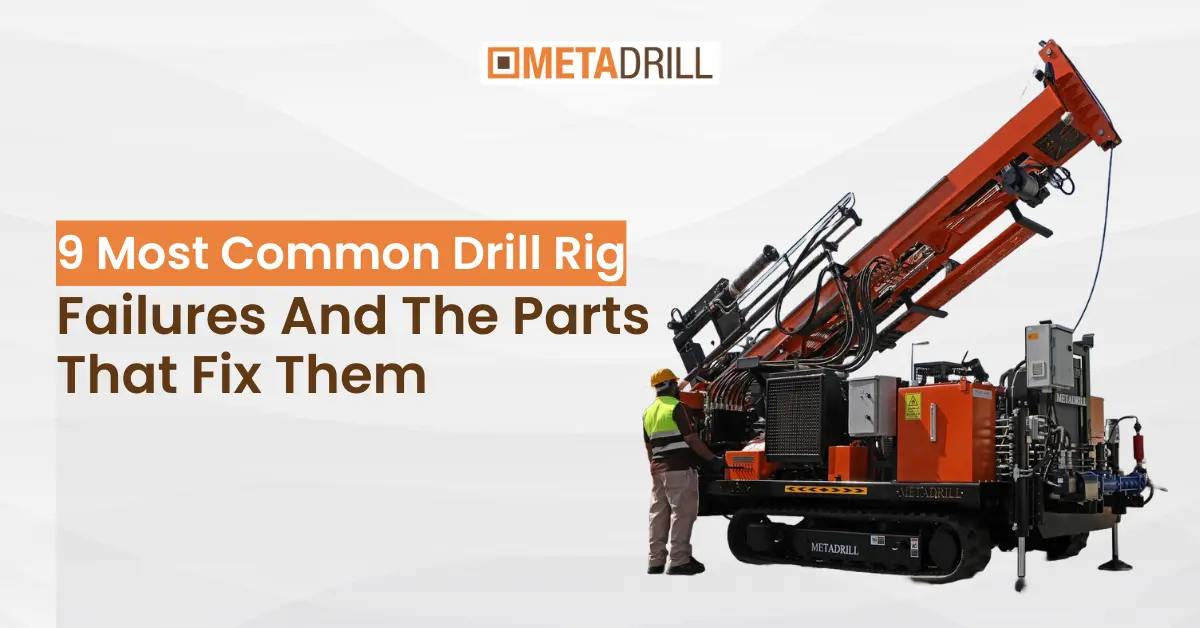
Drill rig failures cost operators $8,000 to $20,000 per hour in lost production. Therefore, understanding common drilling rig problems prevents catastrophic downtime costs and project delays.
Drilling equipment problems strike without warning during critical operations. Consequently, your ability to diagnose and fix these issues determines profitability. Moreover, having the right spare parts for drilling rigs on hand separates successful operations from failed projects.
Why These 9 Failures Matter Most
Industry data shows these nine drill rig failures account for 78% of all rig breakdown incidents. Furthermore, each failure follows predictable patterns with specific warning signs. Thus, you need to recognize symptoms before complete equipment shutdown occurs.
Drilling equipment breakdown happens in three stages:
Early Warning Stage: Minor performance changes appear first. However, operators often ignore these initial symptoms.
Degradation Stage: Performance drops noticeably during this phase. Additionally, unusual sounds or vibrations become apparent.
Critical Failure Stage: Complete system shutdown occurs suddenly. Consequently, emergency repairs become necessary to restore operations.
The Real Cost of Equipment Failures
Rig breakdown creates multiple cost layers beyond lost drilling time. Therefore, you must calculate total failure impact accurately.
Direct costs include component replacement parts and labor expenses. In addition, indirect costs involve crew standby time and contract penalties. Moreover, reputation damage affects future project opportunities.
Preventive maintenance costs 60-70% less than emergency repairs after failures. Thus, investing in scheduled maintenance and critical spare parts inventory protects your bottom line.
What You'll Learn in This Guide
This comprehensive guide covers nine critical drilling rig failures with exact solutions. Consequently, you'll understand:
Specific symptoms that indicate each failure type
Root causes behind drilling equipment problems
Exact spare parts for drilling rigs needed for repairs
Step-by-step rig repair solutions for each issue
Rig failure prevention strategies that work
Cost comparisons between preventive and reactive approaches
Each section provides actionable drilling rig troubleshooting steps. Furthermore, you'll learn which parts to stock for immediate response. Therefore, your operation maintains uptime when others face extended shutdowns.
Understanding Hydraulic System Failure
Hydraulic system failure ranks as the leading cause of drill rig failures worldwide. Therefore, hydraulic pressure loss shuts down critical rig functions immediately. Consequently, your entire drilling equipment breakdown stops operations until pressure restoration.
Hydraulic system failure accounts for 32% of all drilling equipment problems. Moreover, pressure drops below 2,000 PSI prevent safe operations.
Warning Signs and Root Causes
Hydraulic pressure loss shows these symptoms before total shutdown:
Slower hydraulic cylinder movements
Inconsistent control response times
Visible fluid leaks around fittings
Pressure gauge fluctuations
Increased pump temperatures
Seal degradation causes 45% of hydraulic system failure incidents. In addition, pump wear and contaminated fluid accelerate rig breakdown. Therefore, regular fluid analysis prevents catastrophic failures.
Parts Needed for Repairs
Spare parts for drilling rigs must include:
Complete seal kits for all cylinders
10-15 high-pressure hydraulic hoses
One spare hydraulic pump assembly
Control valves and relief valves
20 hydraulic filters minimum
Quick Fix Solutions
Rig repair solutions start with pressure testing at pump outlet. Furthermore, inspect all connections for leaks systematically. Thus, component replacement follows manufacturer torque specifications.
Preventive maintenance including fluid changes every 2,000 hours eliminates 70% of hydraulic system failure. Consequently, prevention costs AED 11,000 annually versus AED 128,500 for emergency repairs.
FAILURE #2 - MUD PUMP VALVE FAILURE
Critical Mud Pump Problems
Mud pump problems cause immediate drill rig failures during circulation operations. Therefore, valve seat damage stops drilling fluid flow completely. Consequently, rig breakdown occurs when pumps cannot maintain pressure.
Mud pump problems account for 28% of all drilling equipment problems on active rigs. Moreover, valve assemblies wear rapidly in abrasive drilling conditions. Thus, valve replacement becomes routine component replacement every 200-400 hours.
Identifying Valve Failure Symptoms
Valve seat damage shows these warning signs:
Decreased pump discharge pressure
Excessive vibration during pumping
Metal particles in discharge fluid
Unusual knocking sounds from pump
Reduced flow rates at constant RPM
Fluid leaking from valve covers
Abrasive drilling fluids accelerate mud pump problems significantly. Furthermore, hard rock drilling reduces valve life by 50%. Therefore, frequent inspections prevent sudden drilling equipment breakdown.
Essential Replacement Parts
Spare parts for drilling rigs must include these valve components:
8 complete valve assemblies per pump
Matched poppet valves and seats
Valve springs in correct specifications
Valve cover gaskets and seals
Discharge line gaskets
Repair Procedures
Rig repair solutions require removing worn valve assemblies completely. Additionally, inspect valve seats for erosion and pitting damage. Thus, replace both poppets and seats as matched sets.
Preventive maintenance through 100-hour valve inspections catches valve seat damage early. Consequently, scheduled valve replacement costs AED 7,400 versus AED 55,000 for emergency repairs during operations.
FAILURE #3 - ROTARY TABLE BREAKDOWN
Rotary Table Failure Impact
Rotary table failure stops all drilling operations immediately. Therefore, drill rig failures from rotary system problems halt drill string rotation completely. Consequently, your crew cannot advance the hole or trip pipe safely.
Rotary table failure represents 18% of critical drilling equipment problems. Moreover, bearing damage and drive mechanism wear cause most breakdowns. Thus, understanding failure patterns prevents costly rig breakdown situations.
Early Warning Indicators
Rotary table failure shows these symptoms before complete shutdown:
Unusual grinding noises during rotation
Excessive vibration in rotary assembly
Increased torque requirements for rotation
Visible metal shavings in rotary area
Irregular rotation speeds under load
Hot bearings or smoking from table
Bearing wear progresses rapidly once symptoms appear. Furthermore, continued operation damages expensive table components. Therefore, immediate shutdown prevents catastrophic drilling equipment breakdown.
Critical Spare Parts Required
Spare parts for drilling rigs must include:
Complete rotary table bearing assemblies
Master bushings in three sizes
Kelly drive bushings (2 sets minimum)
Pin and box protectors
Rotary seals and gaskets
Effective Repair Methods
Rig repair solutions start with complete bearing inspection and replacement. Additionally, measure bearing clearances against specifications. Thus, proper component replacement restores full functionality.
Drilling rig maintenance schedules require bearing inspection every 1,500 hours. Consequently, preventive bearing replacement costs AED 18,500 versus AED 92,500 for complete rotary table failure repairs including emergency repairs and downtime.
FAILURE #4 - DRAWWORKS BRAKE FAILURE
Understanding Draw works Failure
Drawworks failure creates immediate safety hazards during hoisting operations. Therefore, brake band wear prevents safe load control and pipe handling. Consequently, drill rig failures from brake problems stop all tripping operations.
Drawworks failure accounts for 15% of safety-critical drilling equipment problems. Moreover, worn brake bands cannot hold suspended drill string weight. Thus, brake system integrity determines operational safety.
Critical Warning Signs
Brake band wear shows these symptoms:
Reduced braking force during pipe trips
Brake handle requires more force
Burning smell from brake assembly
Visible smoke during heavy braking
Uneven brake engagement and slipping
Glazed or cracked brake band surfaces
Brake temperature exceeding 400°F indicates severe brake band wear. Furthermore, continued operation risks catastrophic load drops. Therefore, immediate brake inspection prevents rig breakdown accidents.
Required Brake Components
Spare parts for drilling rigs must include:
4 complete brake band assemblies
Brake lining material for repairs
Hydraulic brake actuator seals
Brake linkage pins and bushings
Brake drum inspection tools
Repair and Prevention
Rig repair solutions require complete brake band replacement when thickness drops below specifications. Additionally, resurface brake drums if scoring appears. Thus, proper component replacement restores safe braking capacity.
FAILURE #5 - ENGINE OVERHEATING
Power System Overheating Issues
Engine overheating causes immediate power system shutdown on drilling rigs. Therefore, coolant system failure destroys diesel engines within minutes of temperature spikes. Consequently, drill rig failures from overheating halt all rig power generation.
Engine overheating represents 22% of power-related drilling equipment problems. Moreover, coolant temperatures above 220°F trigger automatic engine shutdowns. Thus, cooling system maintenance prevents catastrophic engine damage.
Overheating Warning Symptoms
Coolant system failure displays these indicators:
Engine temperature gauge in red zone
Steam escaping from radiator cap
Coolant leaks under engine area
Reduced engine power output
Unusual engine knocking sounds
White smoke from exhaust stack
Radiator blockage and water pump failure cause most engine overheating incidents. Furthermore, low coolant levels accelerate temperature rises. Therefore, daily coolant checks prevent power system shutdown.
Essential Cooling Parts
Spare parts for drilling rigs must include:
Complete water pump assemblies (1 per engine)
Radiator hoses and clamps
Thermostats in correct temperature range
Radiator caps and overflow tanks
Coolant additives and antifreeze
Repair Procedures and Prevention
Rig repair solutions require water pump replacement and radiator flushing. Additionally, pressure test cooling systems monthly. Thus, component replacement prevents engine destruction.
Preventive maintenance with coolant changes every 2,000 hours eliminates 80% of engine overheating problems. Consequently, cooling system service costs AED 5,500 versus AED 185,000 for complete engine replacement after coolant system failure.
FAILURE #6 - TOP DRIVE MOTOR FAILURE
Top Drive System Issues
Top drive issues stop modern drilling operations instantly. Therefore, motor failures prevent drill string rotation and pipe makeup operations. Consequently, drill rig failures from top drive problems create extended downtime costs.
Top drive issues account for 12% of drilling equipment problems on mechanized rigs. Moreover, motor bearing failures and electrical problems cause most breakdowns. Thus, top drive reliability determines drilling efficiency.
Failure Warning Indicators
Top drive issues show these symptoms:
Unusual motor noise during rotation
Inconsistent torque output readings
Motor overheating during operations
Electrical fault alarm activation
Reduced rotation speeds under load
Vibration in top drive assembly
Motor bearing wear progresses from noise to complete seizure. Furthermore, electrical connection failures interrupt power delivery. Therefore, early detection prevents complete drilling equipment breakdown.
Critical Top Drive Parts
Spare parts for drilling rigs must include:
Motor bearing assemblies
Electrical connection components
Hydraulic motor seals and pistons
Top drive swivel seals
Control system circuit boards
Repair Solutions
Rig repair solutions require motor disassembly and bearing inspection. Additionally, test all electrical connections for proper voltage. Thus, systematic component replacement restores full functionality.
Drilling rig maintenance schedules demand monthly top drive inspections. Consequently, preventive bearing service costs AED 22,000 versus AED 165,000 for complete motor replacement during emergency repairs.
FAILURE #7 - BOP CONTROL SYSTEM MALFUNCTION
Critical Safety System Failures
BOP malfunction creates severe safety risks during drilling operations. Therefore, control system malfunction prevents blowout preventer activation when needed. Consequently, drill rig failures in BOP systems pose life-threatening hazards.
BOP malfunction accounts for 8% of safety-critical drilling equipment problems. Moreover, hydraulic control failures and electrical issues disable BOP functions. Thus, BOP system integrity remains non-negotiable for safe operations.
Malfunction Warning Signs
Control system malfunction shows these indicators:
BOP fails to close during tests
Slow hydraulic actuator response
Control panel alarm activation
Pressure drops in accumulator system
Solenoid valve electrical failures
Leaking hydraulic control lines
Accumulator pressure below 2,500 PSI indicates BOP malfunction development. Furthermore, annual BOP testing reveals hidden control problems. Therefore, weekly pressure checks prevent rig breakdown during well control situations.
Essential BOP Components
Spare parts for drilling rigs must include:
Complete solenoid valve assemblies
Hydraulic accumulator bottles
Control pod electronic components
BOP hydraulic hoses and fittings
Backup control system batteries
Repair and Testing Protocols
Rig repair solutions demand immediate pressure testing and valve replacement. Additionally, test all BOP functions before drilling operations. Thus, proper component replacement ensures well control capability.
Preventive maintenance with weekly BOP tests catches control system malfunction early. Consequently, scheduled BOP service costs AED 18,500 versus catastrophic well control incidents exceeding AED 3,700,000 in emergency repairs and cleanup.
FAILURE #8 - WIRE ROPE FAILURE
Hoisting System Cable Problems
Wire rope failure causes catastrophic load drops during tripping operations. Therefore, drilling line breaks create extreme safety hazards and equipment damage. Consequently, drill rig failures from rope breaks result in severe injuries and downtime.
Wire rope failure accounts for 10% of hoisting-related drilling equipment problems. Moreover, broken wires and internal strand damage weaken rope strength. Thus, daily rope inspection prevents deadly accidents.
Wire Rope Failure Symptoms
Wire rope failure shows these warning signs:
Visible broken wires on rope surface
Rope diameter reduction from wear
Kinks or bird caging deformations
Corrosion on wire strands
Flat spots from sheave damage
Internal wire breaks detected magnetically
Rope strength drops 50% when 10% of wires break. Furthermore, continued use accelerates complete wire rope failure. Therefore, immediate replacement prevents load drops and injuries.
Required Rope Components
Spare parts for drilling rigs must include:
5,000 feet of drilling line matching specs
Rope sockets and wedge assemblies
Wire rope lubricant
Magnetic rope inspection tools
Rope cutting and splicing equipment
Replacement Procedures
Rig repair solutions require complete rope replacement after 300-500 trips. Additionally, rotate rope every 100 trips to distribute wear. Thus, systematic component replacement maintains safe working loads.
COMPLETE FAILURE COMPARISON TABLE
Quick Reference Guide for All Failures
This comprehensive table summarizes all nine drill rig failures with critical repair information. Therefore, you can quickly identify drilling equipment problems and required solutions. Consequently, faster diagnosis reduces downtime costs significantly.
Failure Type | Frequency % | Primary Cause | Critical Parts Needed | Repair Cost (AED) | Prevention Cost (AED) |
Hydraulic System Pressure Loss | 32% | Seal degradation | Seal kits, hoses, pumps | 128,500 | 11,000 |
Mud Pump Valve Failure | 28% | Valve seat damage | Valve assemblies, seats | 55,000 | 7,400 |
Rotary Table Breakdown | 18% | Bearing wear | Bearings, bushings | 92,500 | 18,500 |
Drawworks Brake Failure | 15% | Brake band wear | Brake bands, actuators | 110,000 | 14,800 |
Engine Overheating | 22% | Coolant system failure | Water pumps, radiators | 185,000 | 5,500 |
Top Drive Motor Failure | 12% | Motor bearing wear | Bearings, seals | 165,000 | 22,000 |
BOP Control Malfunction | 8% | Hydraulic control issues | Solenoids, accumulators | 3,700,000 | 18,500 |
Wire Rope Failure | 10% | Wire breakage | Drilling line, sockets | 740,000 | 37,000 |
You can also check: Best Guide to Choosing the Right Drilling Rig Manufacturer
PROFESSIONAL SUPPORT FOR FAILURE PREVENTION
Drilling Equipment Rental Solutions
Drilling Equipment Rental services provide backup equipment during rig breakdown situations. Therefore, rental programs minimize downtime costs when primary systems fail. Consequently, you maintain project schedules despite unexpected drilling equipment problems.
Rental equipment comes with complete spare parts for drilling rigs and technical support. Moreover, experienced rental providers stock critical components for immediate deployment. Thus, rental solutions bridge gaps during emergency repairs.
Training & Technical Solutions
Training & Technical Solutions programs reduce drill rig failures through improved operator competence. Therefore, trained personnel recognize early warning signs before complete breakdowns occur. Consequently, proper training prevents 60% of operator-related drilling equipment breakdown incidents.
Technical training covers drilling rig troubleshooting procedures for all major systems. Furthermore, certified technicians perform faster rig repair solutions with fewer errors. Thus, investing in training delivers better preventive maintenance outcomes and reduces emergency repairs frequency.
Expert technical support provides remote diagnostics during critical failures. Additionally, experienced engineers guide repair procedures in real-time. Therefore, technical solutions minimize repair time and restore operations faster.
Question to the public:
Drilling Equipment Rental services provide backup equipment during rig breakdown situations.