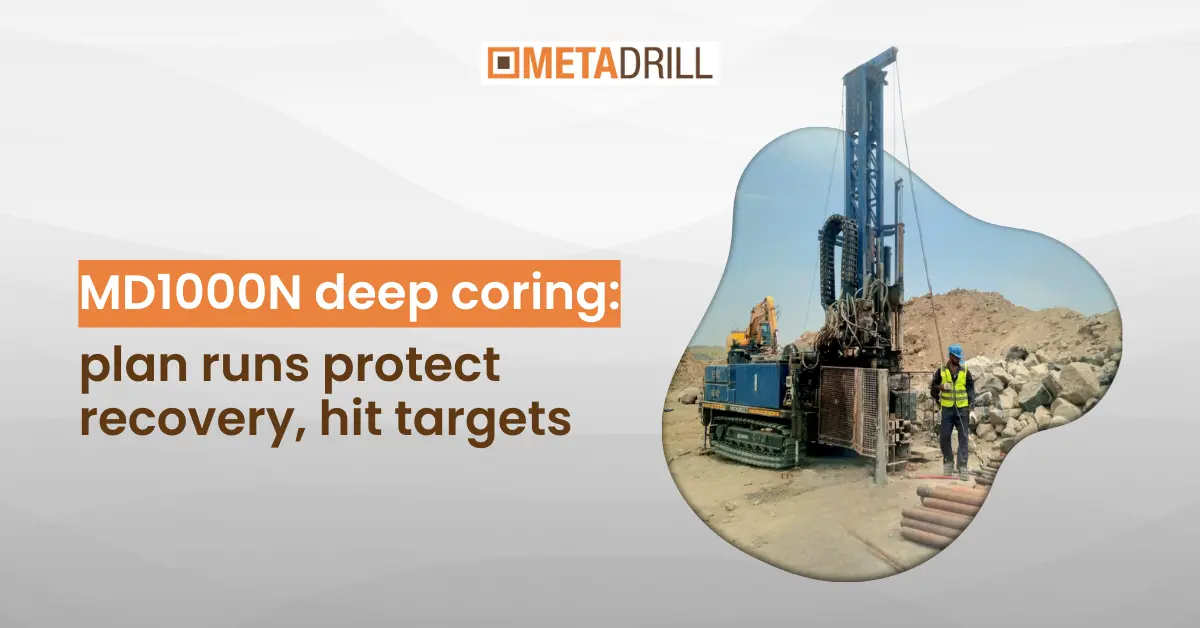
Deep programs succeed when planning meets the machine. The MD1000N drill rig pairs high torque with stable feed to keep core quality high across changing formations. This guide shows how to plan runs, stage tooling, and set parameters, so the MD1000N geotechnical drilling rig delivers predictable meters per shift.
What MD1000N is Built to Do
Mission profile
The MD1000N geotechnical drilling rig is designed for long wireline coring where recovery, not just footage, proves success. As a heavy-duty geotechnical drill rig, it combines torque headroom with smooth feed and reliable extraction, so crews keep rotation alive in hard, interbedded layers instead of stalling or damaging strings.
Where it earns its keep
Urban infrastructure investigations needing deep, defensible core
Exploration holes with cemented bands and abrupt hardness shifts
Programs where stable parameters protect bit life and sample integrity
Plan the Run Before You Spin
Ground model → run plan → parameter window
Start by mapping expected transitions and refusal depths. Convert that into a run plan for the MD1000N drill rig with three dials defined up front:
Rotation (RPM): match to crown spec to avoid glazing or chatter
Torque / Weight-on-bit: enough bite to keep cutting without overloading
Feed & extraction: steady advance that preserves liner and core
Tooling and consumables
Build a shelf for drilling tools that fits your ground model: alternative crowns, shoe sets, spare barrels, and a clean rod string. Keep thread compound, LCM, and fluids ready where crews can reach them without unsafe “lean-ins.” Well-staged drilling rig equipment prevents rushed decisions that ruin recovery.
Execute with Discipline
Rotation, feed, returns: the golden trio
Hold RPM in the crown’s sweet spot; do not chase stalls with speed
Tune feed to maintain contact without oscillation
Watch returns: fines or color shifts signal parameter changes or ground water effects
Rod handling without hand risk
Use mechanical aids on every connection. Clean jaws and slips; gritty contact turns into slippage and heat, risking rod damage. This is universal, whether you call it a geotech drill rig or a heavy drill rig, hands never chase rotating steel.
Sampling that stands up in review
Label core boxes before the run, record recovery and RQD at the rig, and photograph boxes with IDs visible. A compliant chain of custody makes the MD1000N geotechnical drilling rig not just productive, but defensible.
Troubleshooting on the Fly
If penetration stalls
Step down RPM; add weight carefully; change crown if needed
Check fluid density/viscosity; adjust flushing before heat builds in the bit
If vibration spikes
Reduce RPM, refine feed, inspect bit wear, and confirm rod straightness
Replace worn dies; polished jaws can scar rods and shorten the life of critical drilling tools
If recovery drops
Shorten core runs; verify shoe/liner pairing; clean the barrel
Recut the face, then resume inside the planned parameter window
Make The Site Help the Rig
Set the pad for quality and safety
Exclusion zones: paint the rotation envelope; one radio channel for commands
Housekeeping: mats, cable routing, spill control around drilling rig equipment
Sightlines: mirrors or cameras to watch the rod handler and returns
Cooling and contamination
Backflush the cooling stack daily, keep cabinets closed and filtered, and cap every hydraulic port. Clean oil and cool electronics keep a geotechnical drill rig within spec when days run hot.
Field-Proven Checklists
Start-of-shift
Guards/interlocks live; E-stops tested
Sensors (RPM, torque, pressure) verified
Tooling staged (crowns, barrels, rods)
Core labels prepped; camera ready for box photos
Core run discipline
Hands clear; aids only
Rotation/feed inside target window
Returns monitored and logged
Recovery, RQD, refusals recorded in real time
Why Deep-Coring Rigor Matters in the GCC
The GCC construction market reached USD 147.1B in 2024 and is projected to USD 226.2B by 2033 (4.9% CAGR), a pipeline that rewards rigs and teams that turn variable geology into consistent samples and schedules.
Quick Comparison: What MD1000N Brings to Your Program
Capabilities you’ll feel on site
High-torque rotation keeps cutting in tough transitions
Stable feed/extraction reduces stuck-rod events and protects liners
Rig control that scales with skill, new crews learn fast; experts can finesse
Fit with your fleet
Pairing the MD1000N drill rig with smaller site-access units lets you cover shallow checks and long holes without overcommitting a single platform. In mixed portfolios of MetaDrill geotechnical drilling equipment, the MD1000N is the dependable deep specialist.
You can also check: How to Deploy the MD150N Drill for Geotech Coring Ops Safely
Conclusion
Choose the MD1000N geotechnical drilling rig when your program demands long, defensible core runs through changing formations. Plan a parameter window, stage the right drilling tools, and keep drilling rig equipment inspection-friendly so shifts stay predictable. Whether you call it a geotech drill rig or simply the deep specialist of your fleet, the MD1000N drill rig turns run plans into clean boxes and schedules you can trust, shift after shift.
Question to the public:
Optimize deep coring with the MD1000N geotechnical drilling rig; plan runs, protect core quality, and get predictable meters per shift in tough ground max!