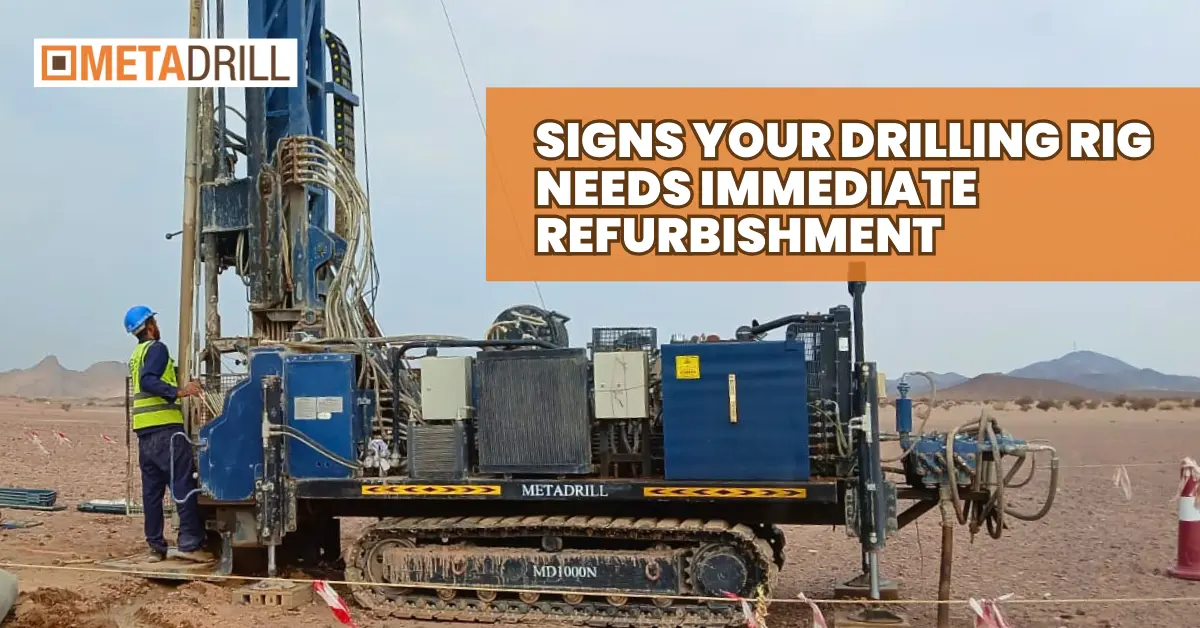
Indications Your Drilling Rig Big Time Needs Refurbishment.
The majority of drilling rigs do not just go amok. The changes in behavior begin gradually, and when a person is operating the equipment every day, the slightest changes become evident before any catastrophic failure occurs. Occasionally, the rig will be heavier to lift, the rotation will not sound the same, and there will be some operators who will start changing controls more than they usually do just to ensure the rig continues drilling at normal rates. The signs are normally overlooked since the rig is still operating; however, it is still operating within the conditions that are causing further pressure to the system.
Old age is not the sole reason to refurbish; there are still a lot of systems that possess a good structural life left on, but due to the years of constant use, some of them start losing their balance. Vibration developing When vibration develops, there will be delays in hydraulic response, or electrical controls will become unstable. This is typically an indication that the rig requires some attention before the problem can be transmitted to many components. Being aware of these early warning signs assists the team tin performing at the appropriate moment rather than responding to costly mistakes.
In this guide, we will take the obvious indicators that a drilling rig requires urgent refurbishment so that the operators and technicians can make decisions that reflect the actual working conditions and not be caught in an abrupt downtime.
Decelerated Response and Drops of Hydraulic Pressure.
The other red flag is the initiation of hydraulic movements that are no longer fast-moving or even regular. The operators may note that lifting is more difficult, rotation is slow, or pressure is not constant throughout the drilling. Initially, these changes can be small ones, and the teams are capable of adapting to them by adding more power or repeating certain motions, yet these modifications tend to add more load to the system rather than address the actual problem.
The loss of hydraulic pressure is usually caused by the old hose, old valves, or internal leaks that cannot be observed from the outside. These minor vulnerabilities have an overall impact on the efficiency of the whole rig in the long run since hydraulic systems are used to govern the majority of core drilling activities. Refurbishment can also be used when the pressure is not constant, other response is slow, and technicians can change important hydraulic parts and restore the system to a stable working point. Early action at this stage ensures that the rig does not get to a stage where lifting or rotational operation is not possible when active operations are taking place.
Electrical Control instability, sensor errors.
The issue is sometimes not initiated by noise or vibration but rather by the behavior of the rig with in espect to responding to commands. When an operator presses a control, he/she will see a delay that is slight, or some of the numbers on the panel will start moving around without an apparent cause. Initially, these problems are not big since the rig is still functioning, but sporadic indications of faulty sensors orthe control system may be a source of information that any electrical parts are either old or becoming volatile.
Slowly, loose wiring, old control panels, or deteriorated sensors may lead to compromising the accuracy of the way the rig reports its performance. When the red light starts showing too frequently, or the information on the monitor begins to be untrustworthy, the problem is not just a matter of servicing. Due to electrical instability, the drilling process becomes erratic since the operators are not able to rely wholly on the information the system provides them with. This step of refurbishing will assist in the replacement of old electrical components and will enhance effective communication between the controls, sensors, and the mechanical systems.
Open Structural Wear and Frame Fatigue.
Some of these warning signs are manifested by the changes in performance, but others can be seen by the physical state of the rig itself. With time, the mast, frame, and welded joints are under constant stress due to heavy drilling loads, and minor cracks on the surface, corrosion, or slight bending can start appearing. The changes usually evolve,e and thus they can be easily ignored in the day-to-day running of business.
The term structural fatigue does not necessarily indicate that the rig is approaching its end-of-service, but it is an indicator that reinforcement or refurbishment is required to be performed with the aim of ensuring safe working conditions. Not taking notice of the apparent wear may enable the stress to spread on the frame that would consequently lead to unexpected breaking during lifting or rotation. When crews observe stress lines, poor welds,s or poor alignment in the arrangement, refurbishment is used to provide the structure with strength,th and the rig keeps on working in a safe condition despite the challenging working conditions in drilling.
Constant Failures and Increasing Service Charges.
The other indicator that a drilling rig might require urgent refurbishment is when minor repairs begin occurring at a higher rate than normal. The breakdowns are at first unrelated, such as a replacement of a hose one week and a mechanical part the following week, but with time, the trend is seen. The rig has spent most of its time in repair rather than in real drilling, and crews have to work on problem-solving rather than having a machine that is stable.
When it is found that frequent repairs are being done, it is quite possible that it is not a failure of systems but aged systems. When technicians continue repairing one component after another without repairing the root cause, the maintenance cost is gradually rising, and performance is still falling. Refurbishment is effective in resetting this cycle, as it addresses the need to rebuild core systems collaboratively, rather than individually treating the problems. Intervention at this point has the potential to minimise long-term costs as well as return the rig to a more foreseeable operating state.
Inefficient Drilling and Increased Fuel Usage.
In some cases, the red flags come not when the rig experiences obvious destruction but due to incremental alterations in the performance of the rig during the day-to-day operations. There are chances that the operators might observe that the drilling is slower than before or that the engine may be consuming more fuel to obtain the same output. These transformations tend to emerge gradually and are hence hard to notice until the time when productivity starts to decline in various projects.
Reduced efficiency occurs most commonly when mechanical alignment changes, a hydraulic system loses pressure balance, or when the engines work extra hard to accommodate internal wear. The rig begins to burn more energy, instead of running smoothly on power, to continue running at normal drilling speed. This not only increases fuel expenses but also causes additional strains on the engine and other parts around it. At this point, refurbishing assists in restoring system equilibrium, enabling the rig to resume stable operation and increase the overall efficiency of operation.
When to Act: Select Refurbishment in Advance of Collapse.
It is common to see many groups take up the decision to refurbish only when a drilling rig has stopped, but most equipment has enough indicators long before it gets to that stage. When one acts early, it does not imply that the rig is weak; it just implies that the systems have reached a point where it will be safe to rebuild to safeguard the long-term performance. At the points of increased vibration, controls become less responsive, or maintenance is more frequent; these are the indicators that the rig is demanding our attention and still has enough strength to be brought back to usefulness.
Timing refurbishment also contributes to preventing unexpected delays of the project, as the scheduled upgrades enable technicians to work in a regulated setting rather than addressing the emergency failures in the field. Timely intervention maintains the structural integrity and avoids the expansion of stress in several systems simultaneously. Instead of waiting until it failed, the time to realize when it is better to refurbish gives the companies assurance of saving productivity and safety, besides ensuring that the drilling equipment has a longer-than-anticipated working life.
You can also check: MD600N vs MD600X: Choosing the Right Rig for Torque, Depth, and Uptime
Conclusion: Your rig is trying to tell you something.
Each drilling rig has its own rhythm, formed over several years of work, and those working around it can easily feel it start to alter. The change in vibration, progressive hydraulic reaction, electrical variations, or observable structural deterioration are not accidental; these areas are indicators that the machine is approaching the point where refurbishment can truly help. Areas not attended to tend to increase the costs of repair and never really know when to be offline, whereas areas given attention will enable teams to operate with confidence.
Refurbishment is not merely about the repair of the damage; it is about the restoration of equilibrium within the whole system in such a manner that the rig can proceed to work safely and effectively. When the operators know the indicators of an early warning and act before the performance becomes too low, the used drilling rigs can be a reliable drill tool, rather than becoming an operational risk. Listening to what the equipment is conveying based on its daily performance, companies develop a more intelligent way of maintenance and continued drilling business without having to make a non-needed stop.
Question to the public:
When the operators know the indicators of an early warning and act before the performance becomes too low, the used drilling rigs can be a reliable drill tool, rather than becoming an operational risk.