SPT looks simple until you need reliable data
Lower a split-spoon sampler to the bottom of a borehole, drive it with a hammer and count the blows. That short description makes Standard Penetration Testing sound almost foolproof. It isn't. Geotechnical drill rig, SPT testing quality depends on borehole preparation, hammer performance, sampler condition, depth control and accurate recording. In UAE sandy soils, SPT is widely used because it provides a practical indication of penetration resistance and supports geotechnical interpretation. But an N-value only has engineering value when the test behind it was performed consistently.
What happens during the test
The borehole is advanced to the required test depth and the base is prepared so loose cuttings do not distort the result. A standard split-spoon sampler is then lowered into position. The hammer drives the sampler through a prescribed penetration, with blows counted over set intervals. The commonly reported N-value is based on the blow count for the relevant portion of penetration under the specified test procedure. The exact procedure should follow the project standard, such as the applicable ASTM or BS method where specified by the consultant.
Why the drill rig matters
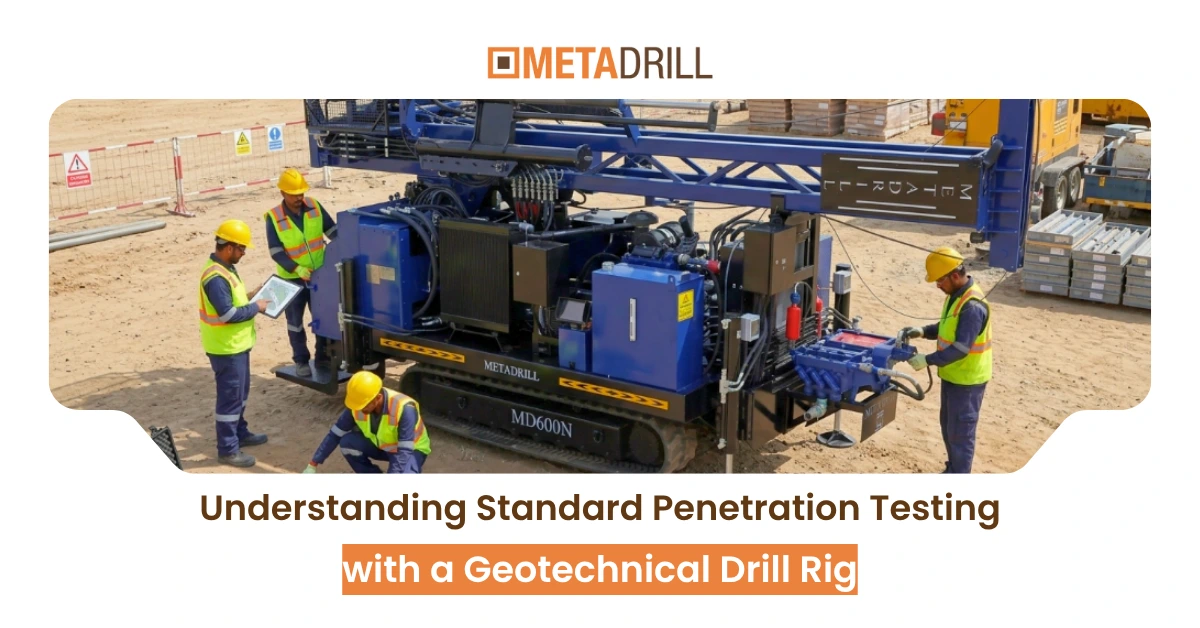
SPT is not independent of the drilling system. The geotechnical drill rig has to maintain a stable borehole, position the sampler properly and provide a safe setup for hammer operation. Automatic SPT hammers can improve repeatability and reduce manual handling when correctly maintained. MetaDrill offers automatic SPT capability on models including the MD600N as an option. Whatever system is used, the team should verify hammer condition, alignment and any calibration or energy requirements specified for the project.
What the N-value tells engineers
The N-value gives an indication of soil resistance to penetration. Engineers use it alongside soil description, groundwater, laboratory data and local experience to assess density or consistency and support design correlations. It should not be treated as a direct standalone measurement of every soil property. Corrections may be applied during engineering interpretation for factors such as overburden or hammer energy, depending on the design method. The drilling crew's job is to produce the cleanest field observation possible so those later interpretations are meaningful.
Dubai sand can be deceptive
Loose sand can produce low resistance, while dense or cemented layers can increase blow counts sharply. Below groundwater, borehole stability and base cleaning become important because running sand or disturbed material can influence the test. Reclaimed coastal sites may contain variable fill that changes quickly with depth. That is why the driller and geologist should record what happens around each test rather than writing down a number and moving on. Refusal, gravel, cemented material or unusual sample recovery all need context.
Common field mistakes
Several avoidable problems reduce SPT quality: testing on accumulated cuttings, using damaged sampling equipment, poor hammer drop control, inaccurate depth records, failing to note refusal and allowing the borehole to collapse before the sampler is placed. Another mistake is rushing the procedure because the project has many tests. Consistency matters more than shaving a few minutes from each interval. Drilling rig tools should be inspected regularly so worn connections, ropes or sampler components do not introduce unnecessary variability or safety risk.
Heat and equipment condition
UAE summer heat affects the rig even though the test itself happens below ground. Hydraulic systems, winches and lifting components work in high ambient temperature, while dust can accelerate wear. Daily checks are therefore part of SPT quality control. An unreliable winch or poorly maintained hammer system is not just a maintenance issue; it can interrupt the test sequence or create unsafe manual handling. Crews should follow the manufacturer's service schedule and increase inspections in severe conditions.
SPT on coastal and marine projects
On saturated coastal sites, keeping the borehole stable is often the bigger challenge than driving the sampler. Temporary casing or suitable drilling-fluid procedures may be needed. Saline groundwater also increases cleaning and corrosion-prevention requirements for the rig and sampling tools. Where testing takes place on port or marine infrastructure, work-platform and environmental controls add another layer. The SPT procedure still needs to remain standardized even when the site logistics are anything but standard.
How SPT fits into UAE project requirements
Dubai Municipality publishes soil and foundation testing requirements, while other authorities, developers and consultants may specify their own testing schedules and reporting formats. The investigation plan should define test depths, termination criteria and the applicable standard. Field teams should not change those requirements casually. If conditions prevent a test from being completed as planned, record what happened and raise it with the supervising geotechnical engineer. Good documentation is part of the test.
Quality control after the test
The test is not finished when the hammer stops. The sample should be recovered, identified and logged, and the field sheet should capture depth, blows, penetration, recovery and any unusual observations. Supervisors should review records while the crew is still on site because missing information is hard to reconstruct later. If the project requires energy calibration records or specific equipment identifiers, keep those documents linked to the borehole logs. This small discipline helps the final geotechnical report remain traceable from design interpretation back to the field operation.
Treat refusal as information, not a nuisance
High blow counts or refusal can occur in dense gravel, cemented layers or very hard material. The crew should follow the specified refusal criteria and record exactly what happened rather than forcing the sampler simply to complete a standard penetration. The geotechnical engineer can then decide whether the result reflects a genuinely dense layer, obstruction or a change in drilling method. If rock coring follows, the transition depth should be documented carefully. Clear refusal records are particularly useful on UAE sites where thin cemented horizons can occur within otherwise sandy profiles.
Keep drilling and testing records linked
The SPT sheet should match the borehole log, sample number and rig depth without ambiguity. If the borehole is redrilled, cased deeper or advanced by a different method, record that change. These details help reviewers understand the context of unusual N-values and make later data checks much easier, particularly on large projects with many boreholes and several drilling crews.
Consistency matters more on multi-country programmes
Contractors running site investigations across the UAE and neighbouring GCC countries should pay particular attention to hammer type and calibration consistency between crews and rigs. Two teams using different hammer systems or energy ratios can produce N-values that are not directly comparable, even when both followed the correct procedure locally. Standardizing equipment, or at least documenting hammer energy and calibration for every rig in the fleet, keeps SPT data usable when results from different sites or countries are compared during design. If equipment access across borders is a factor, our renting vs buying guide covers how regional support factors into that decision.
Closing
SPT is popular because it is practical, familiar and useful across many soil-investigation programmes. Its apparent simplicity is also why poor practice can be overlooked. A geotechnical drill rig, SPT testing setup should provide a stable borehole, dependable hammer operation, safe handling and accurate depth control. Combine that with disciplined field records and the N-values become far more useful to the engineer. In UAE conditions, where sand, groundwater, heat and coastal exposure can all complicate fieldwork, consistency is the standard worth protecting.
For the broader planning principles behind a UAE site investigation, see our guide on soil investigation before construction. To discuss SPT-capable rig configurations, contact the MetaDrill team.
Question to the public:
Understand SPT testing with a geotechnical drill rig: how the test works, what N-values mean, common field errors, UAE ground conditions, equipment and quality control.