Free zones sell speed. Land is allocated, utilities are close, and a warehouse can go up quickly. So the soil investigation often gets squeezed into whatever time is left.
That's a mistake. In an industrial zone the ground carries heavy floor loads, forklifts, racking and sometimes process equipment. A settlement problem under a big slab is expensive to fix once tenants are in.
This guide covers what's different about drilling inside a free zone or industrial city, in the order a contractor will run into it.
A caveat first. Each zone is run by its own authority with its own rules, and those rules change. Treat this as a checklist of questions to ask, not a statement of what any zone requires today.
Who you're dealing with
On an ordinary plot you answer to the client, the consultant and the municipality. In a free zone there's another layer: the zone authority, and often the master developer.
That affects four things.
- Approvals. Many zones want contractor registration, a method statement and sometimes a permit before work starts. Check the current requirement with each zone authority.
- Site access. Gate passes, vehicle permits and escort rules for heavy plant.
- HSE rules. Industrial zones run their own safety standards on top of national ones. Our GCC safety and compliance guide is a good starting point, then read the zone's own manual.
- Underground services. Utility corridors in a planned zone are mapped, which helps, but the records are the developer's, so ask early.
Allow extra time for the paperwork. It's the thing that most often delays a mobilisation date.
What the ground looks like
JAFZA sits on the Dubai coast near Jebel Ali. KIZAD is inland and coastal-adjacent between Abu Dhabi and Dubai. Dubai Industrial City is inland. So the three differ.
Coastal zones bring shallow groundwater, saline conditions and sabkha pockets. Inland zones lean toward sand over cemented layers, with groundwater deeper but still variable. Reclaimed or filled areas inside any zone can hide uncontrolled fill.
Don't treat a zone as one soil type. The desk study should say what's known, and the boreholes should confirm it. Our guides on sandy and rocky subsurface and pre-construction soil investigation cover the ground side.
What industrial loads change
A warehouse floor isn't a living room floor.
Heavy racking puts concentrated loads on slabs. Forklifts add repeated loading. Storage tanks and process plant add big, sustained loads. All of it makes settlement and bearing capacity more important than on lighter building types.
For the borehole programme, that means:
- Enough boreholes across a large footprint to catch variation, since a big slab can span several soil types.
- Tests that support slab and foundation design, including SPT and, where relevant, laboratory consolidation tests on soft layers.
- Groundwater and chemical sampling so the concrete specification can handle chloride and sulfate.
Large flat sites are quick to drill, but the number of holes adds up. Efficient setup between holes matters more than top-end depth.
Logistics inside a zone
Free zones tend to have good roads and straightforward access, which makes mobilisation easier than a dense city plot. Water for drilling is usually available nearby, but confirm whether you can draw from zone supply or must bring your own.
Plan waste too. Drilling fluid and cuttings need a compliant disposal route. Ask the zone what it accepts.
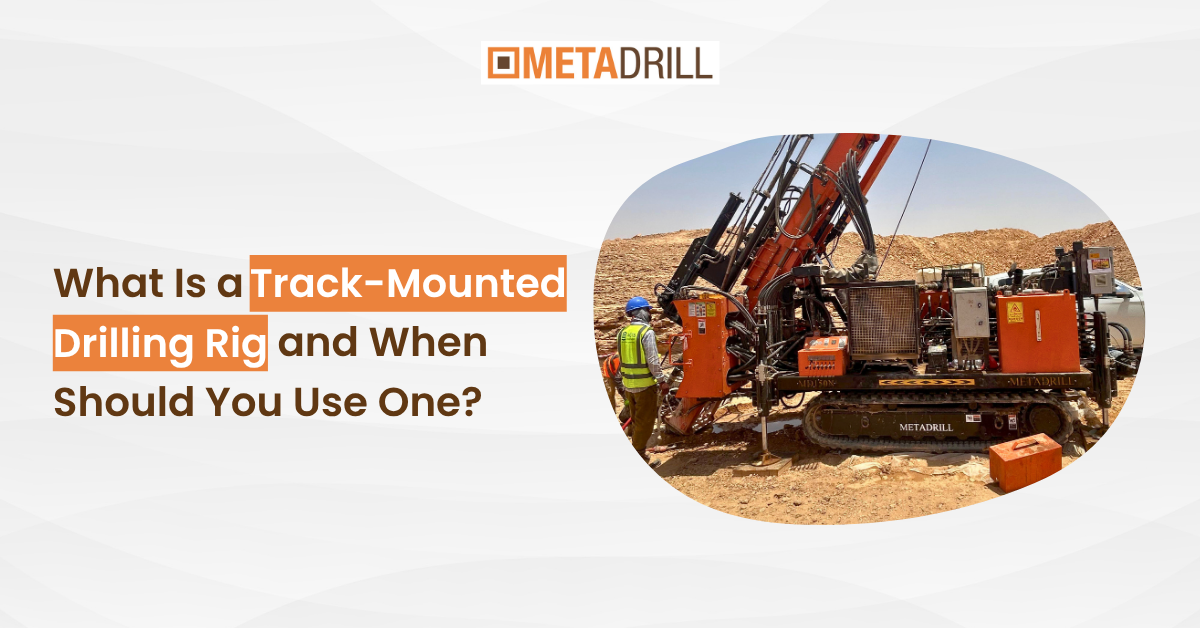
A tracked or truck-mounted rig both work well on flat industrial land. If the site is soft or recently filled, tracks help. Pick up the choice in more detail in the drills page and compare the MD150N and MD600N. The MD600N page lists an automatic SPT hammer, 5,000 Nm of torque and N-wireline coring to 600 m, track or truck. The MD150N is rated to 150 m with N-wireline.
Local manufacture helps
MetaDrill's rigs are made in the UAE, and the company is based in SAIF Zone in Sharjah, so it works inside the free-zone system itself. Why that matters: parts, servicing and import duties on a rig bought from within the country look different from buying one from abroad. We explain the reasoning in why MetaDrill chose the UAE as its base. If you're thinking of buying equipment instead of hiring a contractor, see how to import a drilling rig into the UAE.
A short pre-mobilisation list
- Confirm the zone authority's approval and permit steps.
- Get the services drawings from the developer.
- Agree gate passes and plant access.
- Plan water supply and waste disposal.
- Check the desk study for fill, sabkha or past land use.
- Confirm the borehole count against the footprint, not just the building.
Running the programme on a large flat plot
Free-zone plots are often big, flat and regular, which suits an organized approach.
Start with a grid. A rough spacing across the footprint, tightened around heavy loads like tank bases, crane pads and high-bay racking zones. Set out the holes with a surveyor before the rig arrives, so every hole location is marked and clear of services.
Then sequence the work to cut travel. Drill in lines, not in the order of the numbering on the drawing. On a flat site, a good crew can set up, test and move on with little wasted time. The things that slow a flat site are usually mundane: waiting for water, waiting for a gate pass, waiting for a lab slot.
Keep the logging consistent across the site. Over a large plot, small differences in how different crew members describe soil can look like real changes in the ground. One logger, or one agreed description guide, avoids that.
Mistakes worth avoiding
Assuming the plot is clean. Previous tenants, filled areas and buried services show up often in industrial zones. Ask for the site history.
Leaving waste disposal to the end. Drilling fluid and cuttings pile up. A skip and a disposal route agreed in advance saves an argument later.
Ignoring neighbors. Adjacent plots may already have buildings or operating plant. Dust, noise and vibration can matter even in an industrial area.
Underplanning for heat. Summer working hours, shade for crews and cooling for equipment all affect output. See our heat maintenance guide and the seasonal points in planning around Ramadan and summer schedules.
Reports for tenants and developers
In a free zone, the client may be a developer, a tenant or a contractor, and each may want the report in a different form. Developers often want a summary for planning, tenants want design parameters for their specific building. Ask who the audience is, and agree the format before the work starts.
Quick answers
Do free zones have different soil conditions? The soil depends on location, not the zone label. Coastal zones differ from inland ones.
Do I need a permit to drill in a free zone? Often yes, from the zone authority. Check with the specific zone.
Can I buy a drilling rig inside a free zone? MetaDrill is based in SAIF Zone, Sharjah. Contact us to discuss supply terms for your project.
Planning an industrial site investigation?
Send us the zone, plot size, and expected loads, and we'll suggest a rig and tooling setup. See our site investigation services and solutions, or contact us.
Question to the public:
Drilling in JAFZA, KIZAD, Dubai Industrial City or another UAE free zone? What to check on approvals, access, ground and logistics before you mobilise.